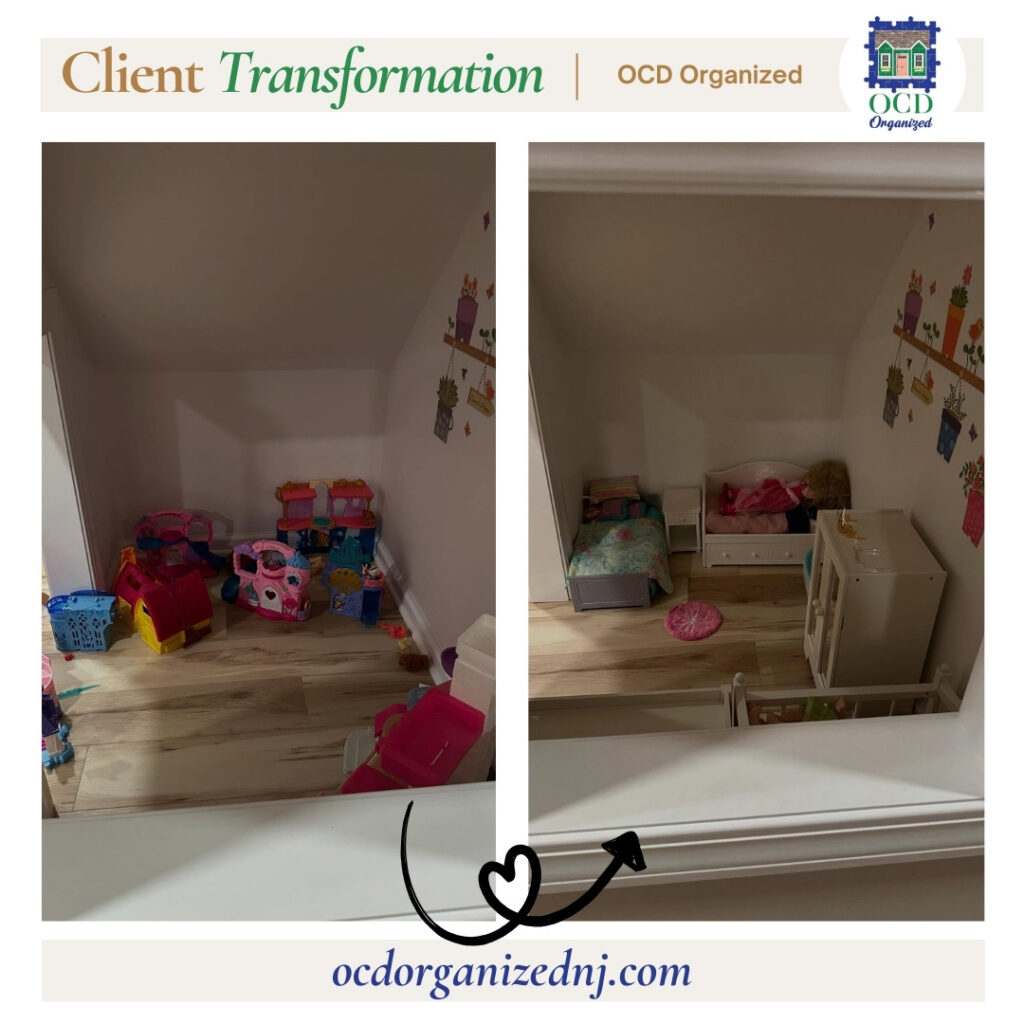
A finished basement should feel like bonus living space—not a toy avalanche. In this recent project, Joan of OCD Organized transformed a busy, multi-purpose basement into a calm playroom with simple systems kids can follow and parents can keep going. The family has two young children and a new baby, so the goals were: reduce the volume, separate shared and sibling items, add a baby-safe zone, and make cleanup quick.
What We Walked Into
- A renovated basement with a sitting area, workout corner, and a large section dedicated to play
- Toys from multiple floors of the home gathering in the basement
- Duplicates, sets with missing pieces, and no clear “home” for categories
- Parents wanting a safe, clear layout before the baby arrived
Step 1: Fast Sort With a Clear Keep/Outflow Path
Sort by category first, decide second. We collected everything into broad piles: blocks, dolls, vehicles, pretend play, art, games, puzzles, stuffed animals. Broken items and toys with missing pieces went out right away. Outgrown items were bagged for donation. This alone opened up floor space and gave the parents instant relief.
Tip for Ocean & Monmouth County families:
Have donation bags ready before you start. Joan can remove donations and deliver them to local organizations so the bags don’t linger and creep back into the house.
Step 2: Build a Toy Rotation That Actually Works
Too many toys equals decision fatigue for kids and visual noise for adults. We set up rotation bins with a simple schedule:
- On display: 6–8 categories max
- In reserve: Labeled lidded bins on a shelf (or closet)
- Swap cadence: Every 2–4 weeks, or any time energy is low and attention needs a reset
How to label: use picture labels plus words so even non-readers can help. A photo of the actual toy set works best.

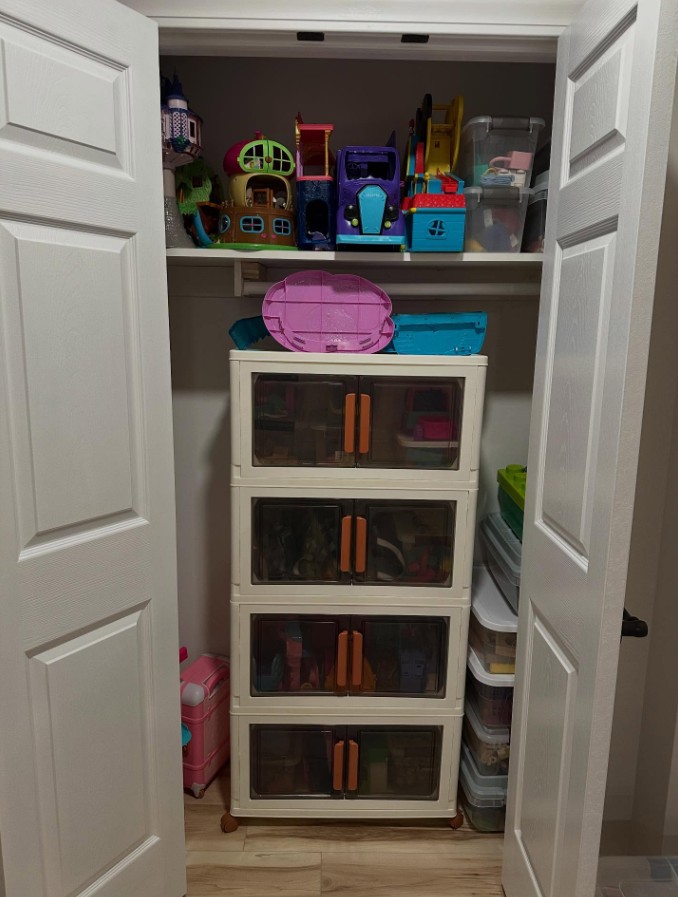
Step 3: Create Purposeful Zones
We mapped play areas to the way the kids actually use the room:
- Kitchen Play: Food sets, pots, and pretend groceries stored in clear bins near the play kitchen
- Barbie & Dolls: A shallow bin for dolls, divided tray for accessories, and a small “closet” basket for clothing
- Sibling Spaces: Side-by-side shelves—each child gets a cubby run with their name; shared toys live in the center bay
- Baby-Pretend Area: Soft mats, board books, large-piece toys—no small parts; placed away from the workout area
- Reading Nook: Basket for current books and a soft chair; extra books shelved nearby and rotated
- Art Table: Lidded containers for crayons/markers, paper tray, and a simple “one project out” rule
Layout rule: Clear walking paths first, storage second. If adults can move through the room easily, toys stop migrating into the sitting area.
Step 4: Storage That Keeps Categories Contained
- Clear bins so kids see what belongs inside
- Shelf dividers to stop categories from sliding into each other
- Under-sofa or under-bench storage for bulky items (train sets, car tracks)
- Closed cabinets for messy sets like kinetic sand or paint—adult access only
- Oversized basket for stuffed animals (a quick 30-second cleanup solution)
Local tip: Big-box containers work, but many Shore homes already have baskets and bins that can be repurposed. Joan always tries to use what you have first, then fills gaps with affordable, durable options.
Step 5: Safety Pass
- Removed rugs with curled edges
- Anchored tall shelving
- Kept small parts out of the baby zone
- Cleared the stair landing and the path to the workout area
Step 6: The Ten-Minute Reset
A playroom stays tidy only if the reset is fast. We set a two-step routine:
- Tidy by picture label: items go back to the matching photo bin
- Floor sweep: one laundry basket run to collect strays, then sort for 60 seconds
Parents can run this reset before dinner or bedtime. Consistency beats perfection.
What Changed for This Family
- Less overwhelm: Fewer visible toys = calmer play
- Safer floor: No more tripping hazards
- Shared rules: Each child knows their cubbies; shared toys go in the middle
- Baby-ready space: Soft, age-appropriate area without small parts nearby
- Adult relief: The sitting area stays clear for relaxing or hosting
Make Your Playroom Work for Real Life
If your basement playroom in Toms River, Brick, Point Pleasant, Barnegat, Freehold, Red Bank, Asbury Park, Eatontown, Wall, or anywhere along the Jersey Shore feels like a dumping ground, you don’t need more square footage—you need a plan that matches your kids’ habits. Joan’s approach is hands-on, judgment-free, and designed to stick.
Professional Organizing Services available across Ocean & Monmouth County, with statewide travel in New Jersey:
- Whole-room or whole-home organizing
- Toy rotation systems and picture labeling
- Donation removal to local partners
- Seasonal refresh visits
- Packing and unpacking support
Ready for a Playroom Reset?
Book a free consultation with OCD Organized. We’ll map your space, set zones, build a rotation, and teach a ten-minute reset your kids can actually do.
Call 732-267-7271 or Contact Us to Book your free consultation for a Basement Playroom reset in New Jersey
Discover more from OCD Organized
Subscribe to get the latest posts sent to your email.